
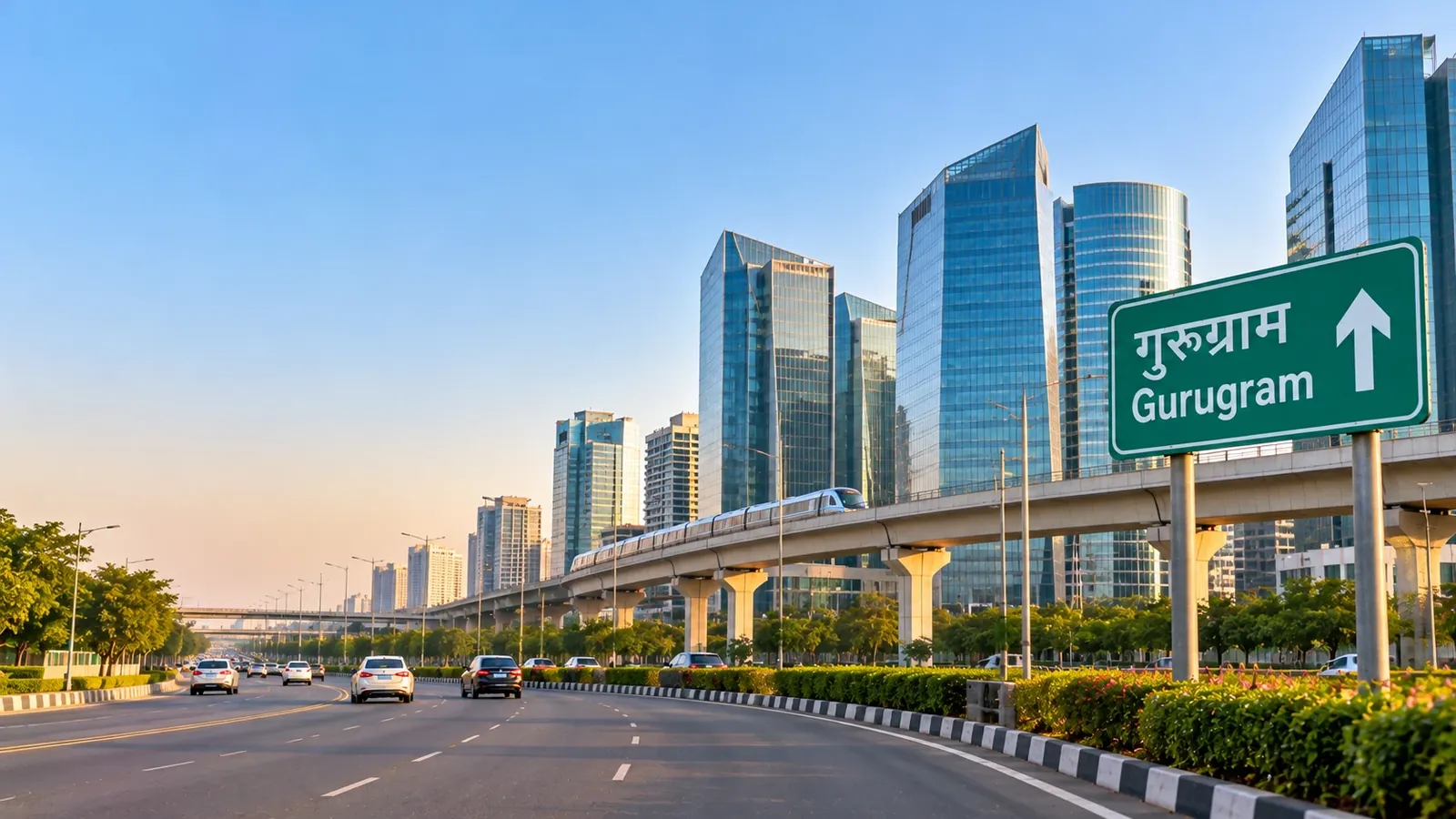
Visitor Management System in Gurugram and Manesar
Replace the paper register with photo-ID check-in, WhatsApp host approval and QR passes. No hardware to buy: visitors scan a QR code, or your guard uses their own phone.
- Cloud Based
- Mobile App
- Go Live in 1 Day
- From ₹1,499/month · 7-Day Free Trial
Companies already running their gates on VizPass










VizPass is a Visitor Management System Gurugram offices and Manesar plants can run on one platform, handling everything from Cyber City office receptions to shift-based factory gates that refuse expired contractor passes. It brings photo and ID capture, WhatsApp host approval, QR passes and live gate records to every entry point, starting at ₹1,499/month with no hardware to buy with a 7-day free trial.
Four Steps at the Gate
A Cyber City lobby with six tenants sharing one entry, and an IMT Manesar plant with three shift changes and contract labour that changes from one shift to the next — these are two different buildings with the same problem: nobody at the gate can tell, in the moment, who is allowed in and who was allowed in yesterday. A visitor register or a guard's memory can't hold that much shifting detail, and that's exactly where a gate starts to leak.
Two Very Different Gates Under One Gurugram-Manesar Problem
Gurugram's office belts — Cyber City, Cyber Hub, Golf Course Road, Udyog Vihar, Sohna Road — run multi-tenant towers where one lobby serves many companies, each with its own hosts, client meetings, VIP visits and a steady stream of couriers. A coworking floor adds day visitors who've never been to the building before. The gate here needs to route a visitor to the right host fast, not slow every entry down with a phone call to reception.
Manesar's plants — IMT Manesar, Sector 37, Pataudi Road, making auto components, electronics, garments — run a different gate entirely: contract labour that changes every shift, transporters delivering to a loading bay, multiple gates open on different shifts, and a register that has to answer "who's inside right now" the moment a siren goes off. Along NH-48 and the Kundli–Manesar–Palwal expressway, logistics parks add a third variant — gates where most of what comes through is a truck, and the register gets searched by truck number, not by name.
VizPass is built to run all three of these gates from the same system, because the record it keeps — photo, ID, host approval, validity, exit — is the same shape everywhere. What changes is which optional details the guard fills in at that gate, such as a vehicle number at a truck gate, since field settings are set per entry route rather than per gate.
What Actually Happens at the Gate
For a Cyber City or Golf Course Road office tower, a visitor's photo and ID are captured at the gate, the host gets a WhatsApp approval request, and a printed pass with a QR code goes out only after that approval comes back. The out-gate scan closes the visit record, so a lobby with six tenants isn't relying on one guard remembering which of forty daily visitors belongs to which floor.
For an IMT Manesar or Sector 37 plant, the same capture happens, and every contractor comes in on a pass for that visit — a pass that has expired or already been used is refused at scan, so nobody gets waved through on last week's pass because the guard recognises his face. Material passes, with the vehicle number typed in, cover what comes in on a truck; staff out-passes cover a worker stepping out mid-shift for a delivery pickup or a personal errand, both on the Gate Control plan. When a shift change means three gates are active at once, each one is checking against the same live list, not a paper register that's only at one gate.
For an NH-48 or KMP logistics park, the gate's real question is "which truck, from which transporter, carrying what" — the same record structure, read by vehicle number instead of visitor name.
- Visitor and contractor photo and ID captured at the point of entry, not written down after the fact
- Host approval over WhatsApp before a pass is printed, so a tower with many tenants routes correctly
- Printed pass with QR code that the out-gate scans to close the record
- Expired and already-used passes refused at scan, not left to the guard's memory
- Material passes with the vehicle number for what comes in on a truck, staff out-passes for what goes out mid-shift (Gate Control plan)
- One live list that a roll call can be pulled from, whichever gate someone entered by
Everything the gate can do is listed in more detail on /features, and the different ways plants and offices put it to use are on /use-cases.
Gates like yours
What Our Customers Say
“VizPass has made our front desk operations much more organised. Visitor check-ins, courier entries and gate approvals are now handled digitally, which saves time and improves accountability.”
Gagan Mathur
 OM Sweets
“VizPass gives our operations team better control over daily gate activity. Material movement, employee exits and reports are now easier to track, approve and review.”
Sandeep Garg
Karan Latex Ltd
“VizPass made our front desk faster and more organised. Visitor check-ins, courier entries and approvals are now handled without paper registers.”
Harman S
Admin Head, Ferozepur College of Engineering
“The platform feels simple for reception staff and professional for guests. Pre-registration and instant host alerts have improved our daily visitor flow.”
Rekha Y
Operation Head, Orchid Petal Ltd
“QR check-ins and OTP verification made guest entry smooth and contactless. Our teams receive notifications on time, without follow-up calls.”
Nitish T
Operation Head, HRIT University
“We have much better control at the gate now. Our security team can verify visitors, track movement and maintain accurate digital records.”
Gaurav S
Facility Manager, MMMIPCollege of Pharmacy
“VizPass gives us clear reports for visitors, couriers and gate activity. It saves admin time and helps management review data quickly.”
Harish G
Plant Head, HPL Ltd
“VizPass has made our front desk operations much more organised. Visitor check-ins, courier entries and gate approvals are now handled digitally, which saves time and improves accountability.”
Gagan Mathur
OM Sweets
“VizPass gives our operations team better control over daily gate activity. Material movement, employee exits and reports are now easier to track, approve and review.”
Sandeep Garg
Karan Latex Ltd
“VizPass made our front desk faster and more organised. Visitor check-ins, courier entries and approvals are now handled without paper registers.”
Harman S
Admin Head, Ferozepur College of Engineering
“The platform feels simple for reception staff and professional for guests. Pre-registration and instant host alerts have improved our daily visitor flow.”
Rekha Y
Operation Head, Orchid Petal Ltd
“QR check-ins and OTP verification made guest entry smooth and contactless. Our teams receive notifications on time, without follow-up calls.”
Nitish T
Operation Head, HRIT University
“We have much better control at the gate now. Our security team can verify visitors, track movement and maintain accurate digital records.”
Gaurav S
Facility Manager, MMMIPCollege of Pharmacy
“VizPass gives us clear reports for visitors, couriers and gate activity. It saves admin time and helps management review data quickly.”
Harish G
Plant Head, HPL Ltd
See It Running at Your Own Gate
A demo at your gate in Gurugram, usually within one working day.
Where a Plant Floor Actually Feels the Difference
Shift-Bound Entry
A plant with staggered shifts has a gate that's busiest at three separate times a day, each with its own crowd of contract labour arriving together. A register that's still being written up from the previous shift is a register that's already wrong. Because VizPass checks each pass at the moment of scan, a shift change doesn't require someone to first "catch up" the paper log before the next shift can be trusted.
Contractor Entry That Doesn't Rely on a Supervisor's Word
Contract labour churn is constant in auto components and garment units — new workers rotate in from a labour contractor, and a supervisor vouching for someone isn't the same as a record at the gate. VizPass records each worker's photo, ID and company at check-in and refuses an expired or used pass. It does not store induction records, so whether an induction is current stays with your safety team — but a worker who must not return until re-inducted can be blocked, and no pass can be issued to them until an admin unblocks them.
Evacuation Roll Call from the Live List
If a siren goes off — for a drill or for real — the person managing the muster point needs to know who's inside right now, not who was inside at the start of the shift. Because the gate record updates on every in and out, an evacuation roll call is pulled from that live list rather than reconstructed from memory. Plant safety obligations under DGFASLI guidelines assume exactly this kind of accountable headcount, and a gate register that's current is what makes that assumption realistic on the day.
Truck-Heavy Gates on the Expressway
A logistics park gate that mostly processes trucks needs a register that can be searched by vehicle number when a transporter calls asking whether a particular truck has cleared the gate yet. On VizPass's visitor and material pass records the guard types the vehicle number, and it is searchable, so that search doesn't mean scrolling a paper book.
Privacy, and Being Honest About Where the Line Is
Visitors who register on the gate app or through the self-registration link see the host company's privacy notice and agree to it before their photo and ID are taken, and that agreement is recorded on the pass — the groundwork the DPDP Rules 2025 require. This matters more at a plant gate than most places realise: a contractor's ID and photo are personal data too, and a register that collects them without a recorded consent is a gap an auditor will eventually find.
What VizPass does not do is quote you a customer list on this page. References from Gurugram or Manesar units running the system are given on request during a demo — not published here, because a client's gate arrangements are theirs to discuss, not ours to advertise.
Compliance Sits Alongside the Gate, Not Instead of It
The DPDP Rules 2025 don't change because a gate is in Gurugram rather than Noida — the same privacy notice and consent capture apply, with the same compliance deadline of 13 May 2027 nationwide. Plants should read the gate's live roll call as one input to evacuation planning, not a replacement for the norms set out by DGFASLI. For how personal data collected at a gate ought to be handled, MeitY is the reference, not this page. Book a walkthrough and bring an actual gate register from Gurugram or Manesar — the demo runs faster against a real one.
Getting It Running, and What It Costs
There's no hardware to buy — any Android tablet at the gate runs it, which matters at a plant with multiple gates where buying dedicated kiosks for each one would be its own procurement headache. Setup is a 7-day free trial, and plans are ₹1,499/month for Single Gate, ₹4,999/month for Basic, ₹9,999 for Front Desk, ₹14,999 for Gate Control — full detail, including what each tier includes, is on /pricing.
Gurugram is roughly an hour from the VizPass support base in Noida by expressway, and on-site demo and go-live visits are scheduled in half-day slots for Gurugram, Manesar and the rest of Delhi NCR. If a site is further out, a video call with a live gate does the same job — someone on the call can walk to the actual gate, show what's there, and see the tablet respond in real time. Support runs Monday to Saturday, 9:30 to 18:30 IST, from BeyondBoxAI Technologies in Noida.
Whether the gate in question is a Cyber Hub lobby juggling six tenants or a Manesar plant running three shifts of contract labour, the fastest way to know if it fits is to see it against your own gate. Sector-specific detail for offices, plants and logistics is on /industries; booking a walkthrough — in person or on video — is on /contact.
Getting the Rollout Right, Tower by Tower
A Cyber City building with six tenants can't be onboarded as one project — each tenant has its own host list, its own visitor categories, and often its own approval cycle for anything touching their floor. The practical approach is to run one tenant's floor as a live pilot during the 7-day free trial, before asking the other five tenants to sign on. At Manesar, the sequencing runs the other way: one plant, one contractor gate, one shift roster — the ID reader and QR pass can go live on the main gate first, with the material and vehicle gate following once the guards on that shift are comfortable with the tablet.
- Start with the gate that has the worst existing register, not the easiest one
- Train the guard on shift, not the security supervisor sitting in an office
- Keep a paper fallback ready for the first week — a power cut or a tablet restart shouldn't stop the gate
Mistakes We See When a Paper Register Is Replaced Too Fast
Moving from a bound register to a screen fails when the switch is treated as a one-day event. A plant running three shifts has three different guard crews, each needing the same short walkthrough — not just the day shift. Contract labour is the other place plants get caught out: if every worker isn't checked in on a pass of their own every single day, someone slips through on the strength of "he's been coming here for months." The gate has to check a pass, not the guard's memory of the face.
What's Worth Watching Once the Gate Is Live
Once a gate is running, the numbers worth checking weekly are simple and specific to Gurugram-Manesar conditions:
- How many visitor records are still open at end of day — an open record usually means the out-gate step was skipped, not that the visitor is still inside
- Who was still inside after their pass end time, and from which contractor, so the host can follow up before it becomes a habit
- Which gate — main, material, vehicle — carries the load on which shift, useful when Manesar plants stagger timings around power availability
Where This Doesn't Fit
A single-guard office with two or three visitors a day doesn't need a tablet-based gate — a register is honestly fine until the visitor count or the host count grows. Similarly, if a Cyber City tenant's real problem is building-wide access cards and turnstiles rather than a visitor log, that's a facilities-management project, not a visitor register; VizPass handles the visitor and gate record, not the building's core access control. The features page and use cases are more precise than any single Gurugram scenario about what's covered and what isn't.
Published pricing
One Flat Price a Month — No Per-User Charges
Prices exclude GST. Start with a free 7-day trial on the Basic plan, no card needed. See what each plan includes →
Visitor Management System in Gurugram and Manesar FAQs
How Does a Visitor Management System Route a Visitor to the Right Host in a Busy Cyber City Lobby?
A Visitor Management System routes visitors correctly by asking, at the point of entry, which host they've come to see, rather than sending everything through one shared reception desk. The guard picks the host on the gate tablet, or the visitor does it on the self-registration link, and if the host sent an invitation link before the meeting the visit is already booked against them. When host approval is switched on, VizPass sends that host the request in the bell, by email, on WhatsApp (when configured) and as an app push, so the host confirms the visitor rather than a guard trying to recall who works where. A visit can also be tagged to a site, area or sub-location, such as a floor, and the On Site list filters by it. VizPass has no multi-tenant building mode in which each tenant company sees only its own visitors in one account, so a lobby shared by several companies is not split by tenant. The features page lists how host notification works. Speed at the gate then depends on the host list being current, not the guard's memory of who works for whom.
How Can a Manesar Factory Stop Contract Labour Whose Induction Has Lapsed from Entering?
VizPass does not store induction records or certificates, so it cannot check an induction date by itself. Two things it does do: every pass covers one visit and is refused once it has expired or been used, so nobody walks in on an old pass; and a worker can be blocked, after which no pass can be issued to them until an admin unblocks them. Block a worker when their induction lapses, and unblock them once your safety team has re-inducted them.
How Does Visitor Management Software Record Trucks and Drivers at Logistics Parks Near NH-48?
VizPass has no separate truck or transporter entry type, and it does not read number plates or capture driver documents, which is worth knowing along NH-48 and the Kundli–Manesar–Palwal expressway where most gate traffic is freight rather than people. The guard types the vehicle number, and it is searchable: on a visitor pass when a driver is checked in as a visitor, and on a material pass, which also carries the driver's name, the party it is from and, for inward loads, a typed PO, DC or invoice number. Material passes run on the gate console on the Gate Control plan. This keeps the register searchable by truck number rather than by a visitor name a guard has to match against a delivery slip. Visitor reports can be filtered by gate and date, so a security head can see what came through a particular entry point without keeping a separate paper register just for vehicles. The industries page covers how logistics gates use this compared with office lobbies or factory floors.
Is Visitor Data Collected at the Gate Secure and Compliant with Indian Data Protection Rules?
Visitor data collected at the gate — names, phone numbers, ID scans, photos — is stored on the system's servers under access controls tied to a building or company account, rather than left in a paper register anyone at the gate can flip through. Access to that data is limited to the roles a company sets up, such as security admin or HR admin, rather than being visible to every guard on every shift. Since this data includes personal identifiers, it falls under India's broader framework for handling personal data, and the Ministry of Electronics & IT publishes the rules governing how such data should be collected, stored and used. A Visitor Management System's role is to give a company the technical means to keep that data access-controlled and auditable — VizPass logs sign-ins, every change to a visit or visitor, user changes and every export or print, though not who viewed a record, and an optional retention setting deletes older visits every night — rather than to interpret the law on a company's behalf; that responsibility still sits with the company deploying it. VizPass has no multi-tenant building mode, so one account cannot keep several tenants' visitors apart at a shared entry point; within a company, staff can be limited to their own workplace and hosts see only their own visitors.
How Does a Factory Security Head Know Who Is Inside During a Shift Change or Emergency?
A security head sees who is inside by checking the live dashboard, which lists everyone who has checked in but not yet checked out, updated as gate scans happen. Since check-in and check-out are both logged at the gate for visitors and contract labour alike, the dashboard reflects who is actually inside rather than a projection based on shift rosters. This matters where a plant runs multiple shifts through the same or different gates, because a worker who checked in on one shift but hasn't checked out yet still shows as present, even after their shift has technically ended. During an emergency such as an alarm, this same dashboard becomes the reference for a roll call, since it's pulled from actual gate activity instead of a register that has to be searched page by page under pressure. Because the log is tied to gate scans rather than manual entry, it doesn't depend on a guard remembering to update a paper book at handover between shifts. The features page covers how the real-time occupancy view is set up across multiple gates on a single site, which is what makes a shift-change headcount possible without a manual walk-through.
How Much Does a Visitor Management System for Multiple Gates in Gurugram or Manesar Cost, and Can It Be Set Up per Gate?
VizPass is priced as a flat monthly fee per company, not per site or gate, so a single Cyber City lobby and a three-shift Manesar plant with a separate logistics gate pay for the plan they choose, not for how many gates they run. Each gate can be set up as its own entry point within one account, so a building with one gate and a plant with several gates for staff, contractors and vehicles both run on the same underlying system. The pricing page lists the four self-serve plans and what each covers; material passes and staff exit passes need Gate Control, and the 7-day free trial runs on the Basic plan. A walkthrough of the actual site shows how gates, sites and the company-wide approval and field settings get configured before a company commits to a plan; those settings apply across the account rather than gate by gate.
Further reading
- Visitor management — Wikipedia
- Physical security — Wikipedia
Your Gate on One Register — Set Up This Week
A demo at your gate in Gurugram, usually within one working day.