
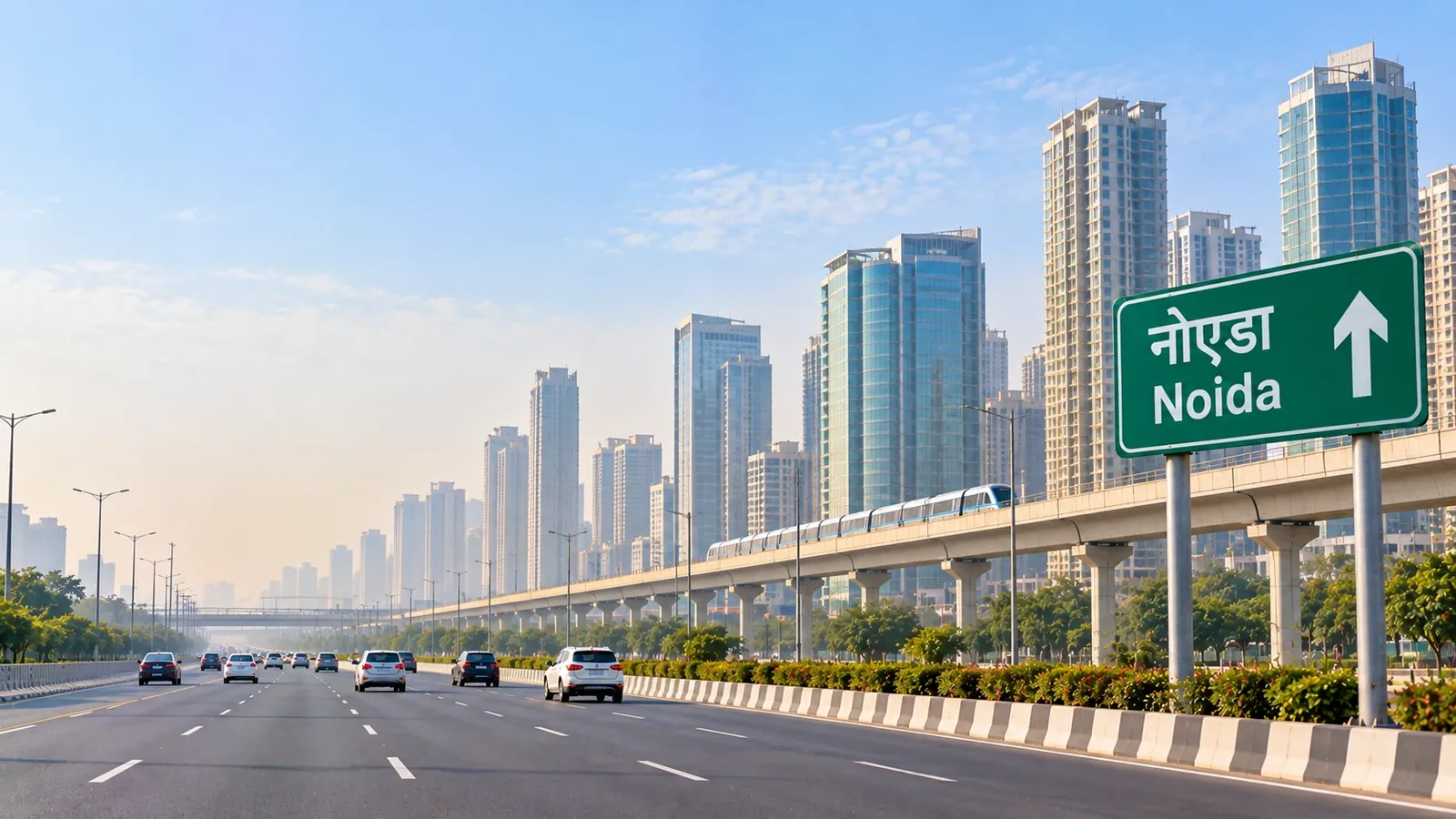
Visitor Management System in Noida and Greater Noida
Replace the paper register with photo-ID check-in, WhatsApp host approval and QR passes. No hardware to buy: visitors scan a QR code, or your guard uses their own phone.
- Cloud Based
- Mobile App
- Go Live in 1 Day
- From ₹1,499/month · 7-Day Free Trial
Companies already running their gates on VizPass










VizPass is a Visitor Management System Noida offices and Greater Noida plants use to photograph, verify and log every entry at the gate in real time, replacing paper registers with host approval on WhatsApp and QR passes the gate refuses once they have expired or been used. One subscription covers office lobbies and industrial plants alike, each with its own gates and hosts under one company-wide approval rule, with on-site demos across Noida, Greater Noida, Ghaziabad, Delhi, Gurugram and Faridabad.
Four Steps at the Gate
Sector 62's IT towers and Greater Noida's contractor-heavy plants share the same weak point: nobody at the gate can say, with certainty, who is inside the building right now. A lobby guard juggling three tenant companies' visitors, or a shift supervisor who has to guess how many transporter drivers are still on the floor when a machine trips — both are running on a paper register that answers questions too late to matter. VizPass replaces that register with a gate process that photographs, verifies and records every entry the moment it happens, on an Android tablet you likely already own.
One Region, Two Very Different Gates
Noida and Greater Noida aren't one kind of site. A multi-tenant office tower in Sector 62–65 or 125–135 has many hosts, a shared lobby, and a steady stream of couriers and food-delivery riders who need a five-second check-in, not a form. A unit in Phase 2, the Hosiery Complex, or out on the Yamuna Expressway has a different problem: contract labour headcounts that swing by the week, material moving in and out through more than one gate, and transporters who show up without notice.
VizPass is built to run both under one account. A head office in Noida and a plant in Greater Noida can sit on the same subscription, each with its own gates and hosts — the office lobby checks in visitors and logs couriers, the plant gate checks contractors in on their own passes and, on the Gate Control plan, runs material passes with the vehicle number typed in, and both report to the same policy owner. Host approval is one company-wide setting, but each visit is tagged to its site, so the On Site list at the office and at the plant can each be filtered to its own people.
What Happens at the Gate, in Order
The sequence is the same whether the visitor is walking into a Film City office or a Kasna electronics plant, and it doesn't depend on the visitor's phone, a WhatsApp download, or a working data connection at their end:
- Photo and ID are captured at the tablet — no app for the visitor to install
- The host gets an approval request on WhatsApp and taps to admit or decline
- A printed pass with a QR code is handed over once approved
- Scanning out at the exit closes that visitor's record — nobody stays "checked in" by accident
- Contractor passes carry an end time, and an expired or already-used pass is refused before the gate opens
- Material movement gets its own pass on the Gate Control plan, separate from a person's visitor pass, with the vehicle number typed in
- Staff stepping out during a shift get an out-pass logged against their name
None of this needs new hardware. An Android tablet at the gate is enough, and the full run-through of these flows is on /features if you want to see each screen before a demo.
Gates like yours
What Our Customers Say
“VizPass has made our front desk operations much more organised. Visitor check-ins, courier entries and gate approvals are now handled digitally, which saves time and improves accountability.”
Gagan Mathur
 OM Sweets
“VizPass gives our operations team better control over daily gate activity. Material movement, employee exits and reports are now easier to track, approve and review.”
Sandeep Garg
Karan Latex Ltd
“VizPass made our front desk faster and more organised. Visitor check-ins, courier entries and approvals are now handled without paper registers.”
Harman S
Admin Head, Ferozepur College of Engineering
“The platform feels simple for reception staff and professional for guests. Pre-registration and instant host alerts have improved our daily visitor flow.”
Rekha Y
Operation Head, Orchid Petal Ltd
“QR check-ins and OTP verification made guest entry smooth and contactless. Our teams receive notifications on time, without follow-up calls.”
Nitish T
Operation Head, HRIT University
“We have much better control at the gate now. Our security team can verify visitors, track movement and maintain accurate digital records.”
Gaurav S
Facility Manager, MMMIPCollege of Pharmacy
“VizPass gives us clear reports for visitors, couriers and gate activity. It saves admin time and helps management review data quickly.”
Harish G
Plant Head, HPL Ltd
“VizPass has made our front desk operations much more organised. Visitor check-ins, courier entries and gate approvals are now handled digitally, which saves time and improves accountability.”
Gagan Mathur
OM Sweets
“VizPass gives our operations team better control over daily gate activity. Material movement, employee exits and reports are now easier to track, approve and review.”
Sandeep Garg
Karan Latex Ltd
“VizPass made our front desk faster and more organised. Visitor check-ins, courier entries and approvals are now handled without paper registers.”
Harman S
Admin Head, Ferozepur College of Engineering
“The platform feels simple for reception staff and professional for guests. Pre-registration and instant host alerts have improved our daily visitor flow.”
Rekha Y
Operation Head, Orchid Petal Ltd
“QR check-ins and OTP verification made guest entry smooth and contactless. Our teams receive notifications on time, without follow-up calls.”
Nitish T
Operation Head, HRIT University
“We have much better control at the gate now. Our security team can verify visitors, track movement and maintain accurate digital records.”
Gaurav S
Facility Manager, MMMIPCollege of Pharmacy
“VizPass gives us clear reports for visitors, couriers and gate activity. It saves admin time and helps management review data quickly.”
Harish G
Plant Head, HPL Ltd
See It Running at Your Own Gate
A demo at your gate in Noida, usually within one working day.
Contractors, Materials, and the Roll Call That Actually Works
A 40-machine unit running two shifts with a mixed contractor workforce has a specific headache: the same 60–80 contract workers don't all belong to the same contractor, their engagement dates don't all end on the same day, and half of them speak a language the security guard at the gate doesn't. VizPass checks each pass at the point of entry — refusing one that has expired or been used — rather than trusting a laminated card that may be months out of date, and on the Gate Control plan it keeps material passes, with the vehicle number typed in, separate from personal visitor passes, so a transporter dropping off coils or a tanker collecting scrap doesn't get logged as a "visitor" alongside someone's client meeting.
The same live gate list is what makes an evacuation roll call meaningful. During a fire drill, or a real emergency, the question is never "how many people badged in today" — it's "who is inside right now." Because out-gate scans close records in real time, the list VizPass shows at the assembly point reflects who hasn't yet been accounted for, which is the number a safety officer actually needs. Statutory record-keeping around this — muster rolls, contractor registers, safety officer duties — is set out by DGFASLI for factories, and a live gate list is a practical way to have that data ready when it's asked for, not a replacement for the register itself.
Privacy Notice and Consent, Not an Afterthought
Visitors who register on the gate app or through the self-registration link see your company's privacy notice and agree to it before their photo and ID are taken, and that agreement is recorded on the pass for that specific visit — not a blanket form signed once and forgotten. This matters more from 13 May 2027, when the DPDP Rules 2025 compliance deadline applies to how personal data, including a visitor's photo and ID details, gets collected and retained. Guidance on how personal data should be handled is published by MeitY, and getting the consent record right at the gate — before the data is even stored — is the simplest part of that compliance to fix early rather than late.
Pricing, and What a Demo Actually Looks Like Here
Because we're headquartered in Sector 62 — fifteen minutes from the metro station and just off the Noida–Greater Noida Expressway — an on-site demo at your gate is usually not a scheduling problem. For sites in Noida, Greater Noida, Ghaziabad, Delhi, Gurugram or Faridabad, we send someone to your actual gate, within one working day of your call. Outside this belt, the demo runs on a video call pointed at your live gate, which works nearly as well for evaluating the flow even if it isn't in person.
Pricing is public and doesn't change based on which sector you're in:
- ₹1,499/month — Single Gate
- ₹4,999/month — Basic
- ₹9,999/month — Front Desk
- ₹14,999/month — Gate Control
- A 7-day free trial on the Basic plan, no hardware purchase required
Full plan details, including what's in each tier, are on /pricing. If your operation spans an office and a plant — say, a Sector 62 head office and a Greater Noida unit — one Gate Control plan on one account covers both sites and their gates at one flat price, and this is worth walking through on a call rather than guessing from a features list.
Where This Fits, and Where It Doesn't
VizPass's visitor plans are a gate and visitor record system, not a full HR or payroll platform; staff attendance from eSSL or ZKTeco devices is a separate Attendance module, on plans priced on request. We also don't publish customer names on this page — references from plants and offices comparable to yours are shared on request once we understand your gate setup, not posted here as logos. If your primary problem is time-and-attendance for a 200-person factory floor rather than who's coming through the gate, this may only solve part of what you need, and it's fairer to say so upfront than to oversell it.
What it does solve — a reliable, auditable record of who entered, who approved them, and who's still inside — is the same problem whether your gate is a glass lobby in Sector 125 or a chain-link entrance off the Yamuna Expressway. Details on how this plays out across different kinds of sites are on /industries and /use-cases, and if you'd rather just see it running at your own gate, /contact is the fastest way to get a working demo on the calendar.
Where This Does Not Fit
VizPass runs the gate — its visitor plans aren't a payroll or biometric-attendance system (staff attendance from eSSL or ZKTeco devices is a separate Attendance module, priced on request), and it doesn't replace CCTV or your existing security staff. It checks contractors in and out, refuses expired passes, logs material and vehicles, and records who is inside; it doesn't decide wage calculations or watch the perimeter. If your plant needs those as separate systems, VizPass sits alongside them rather than in place of them — see the full list on features before assuming a gap that isn't there. And if you're weighing this against a broader HR or security stack across multiple states, our industries page is a better starting point than this one. For everything else — a walkthrough at your own gate, in Noida or Greater Noida — book a slot and bring your toughest gate to the call.
Getting from a Demo to a Live Gate
A rollout works best when it starts at the gate, not in a slide deck. For sites in Noida, Greater Noida, Ghaziabad, Delhi, Gurugram or Faridabad, a demo can usually be arranged at your actual gate within one working day; for a plant further away, the same demo runs on a video call with a live gate on the other end so you're watching real check-ins, not a canned screen. Either way, the next step is the same: a 7-day free trial on the Android tablet already sitting at your reception or security cabin — there's no hardware to buy before you decide anything. Once a plant and a head office are both on board, one pricing plan (Single Gate, Basic, Front Desk or Gate Control) covers the whole company at a flat price, so the choice follows what the busiest site needs — Gate Control if the plant runs material passes or staff exit passes.
Mistakes That Stall a Rollout
Most delays aren't technical — they're about who owns the change on the floor.
- Expecting the office lobby and the plant gate to run different approval rules; host approval is one company-wide setting, so agree it across both sites before go-live.
- Skipping the privacy notice conversation — under DPDP Rules 2025, visitors who register on the gate app or through the self-registration link see your privacy notice and agree to it before their photo and ID are taken, and guards need to know why that screen exists, not just that it does.
- Assuming a guard will type names correctly during a rush; the workflow is built around photo and ID capture at the gate for a reason, and typing defeats it.
- No plan for a power cut. A tablet on battery keeps working; make sure the router or hotspot behind it has the same backup, or the gate reverts to paper the moment the lights go.
What to Watch Once It's Live
The signal that a rollout has actually taken hold isn't a dashboard number — it's whether specific questions get answered without a phone call. Can the shift supervisor say, right now, how many transporter drivers are still on the floor? Does the out-gate close the record reliably enough that nobody shows up twice on tomorrow's contractor list? During a muster drill, does the live list match who's actually standing at the assembly point — the same list the use-cases for evacuation roll call are built around? Factories already running musters against DGFASLI safety norms will recognise this as the same discipline applied to a gate register instead of a fire drill.
Published pricing
One Flat Price a Month — No Per-User Charges
Prices exclude GST. Start with a free 7-day trial on the Basic plan, no card needed. See what each plan includes →
Visitor Management System in Noida and Greater Noida FAQs
How Does Visitor Approval Work at a Busy Sector 62 Office Lobby with Many Hosts?
The lobby guard photographs the visitor on the gate tablet and picks the host being visited, and VizPass sends that host the approval request in the bell, by email, on WhatsApp (when configured) and as an app push, not to a shared front desk. The host can approve or decline from a no-login link, My Visitors on the web, or the app before the visitor is let through, which means the guard isn't making a judgment call on someone else's behalf; the desk can also approve a waiting visit itself. Whether walk-ins need host approval is one company-wide setting. VizPass has no multi-tenant building mode in which each tenant company sees only its own visitors in one account, so a lobby shared by several companies is not split by tenant. Courier parcels go into a separate parcel book at the gate rather than a full visitor form. You can see how host approval works under features if you're comparing it against how your current lobby process handles visitors.
Can VizPass Log Vehicles and Material Movement at a Greater Noida Plant Gate, Not Just People?
Yes, in two ways. The guard types the vehicle number on a visitor pass, so a driver checked in as a visitor carries it on the record, and the number is searchable; and on the Gate Control plan, material passes record what moves in or out, with the vehicle number and the driver's name, on the guard's gate console. VizPass does not read number plates or track vehicles separately from people: a driver on a visitor pass shows as still on site until their exit scan, with the vehicle number on that record. This works the same way whether the plant has one gate or runs material in and out of more than one. Approval and field settings are the same across the account, so the plant and the office follow the same rules — you can see how this is set up for warehouse and factory sites under use-cases.
Is the Visitor and Contractor Data VizPass Collects Stored Securely Under Indian Data Rules?
Yes — the photos, ID details and entry logs captured at the gate are stored on the account tied to your organisation, with access set by the roles you give each user (six built-in roles plus custom roles from 38 permissions), not shared across unrelated accounts. Because the system is recording personal data (names, photos, contact numbers) at the point of entry, how that data is handled matters, and the general framework for personal data handling in India is published by the Ministry of Electronics & IT. VizPass's role in this is straightforward: it replaces a paper register — which anyone at the gate could read or copy — with a digital log where access is controlled by account permissions instead of physical proximity to a book. For a company running both a Noida office and a Greater Noida plant, this also means visitor and contractor data from both sites sits under one policy owner's account rather than two separate paper trails with different levels of exposure. It's worth reviewing this alongside your existing data handling policy before rollout, which is something a walkthrough can go through site by site.
How Can a Shift Supervisor Tell How Many Contractors Are Still on the Factory Floor During a Shift?
The gate log shows every contractor who has checked in but not yet checked out, so the count of people "still inside" is read off entries without exits, not estimated. Each contractor is checked in on their own pass at the tablet, and that check-in stays open until the same person is checked out at the same or a designated gate. This matters for shift handovers and for the kind of headcount question that comes up when a machine trips and someone needs to know who's on the floor right now, not who was on the floor when the register was last updated. Factory safety recordkeeping around contract labour is also covered under DGFASLI guidance, and having a live in/out log is one way to support that recordkeeping rather than reconstructing it from a paper register after the fact. This works the same way whether the plant runs one gate or several, since each gate reports into the same account and the same open/closed entry status.
Can One VizPass Account Run Both a Noida Office and a Greater Noida Plant?
Yes — one subscription covers several sites, each with its own gates and hosts, under one account. Check-in rules are not set per site: host approval is one company-wide setting for walk-ins and one for pre-booked visits, and each entry route (desk walk-in, staff booking, walk-in QR, booking link, returning visitor, invitation) has its own field settings that apply at every site. What differs by site is the record: each visit is tagged to its site, area or sub-location, the On Site list filters by site and gate, and staff can be limited to their own workplace. What ties them together is that both report into the same account, so a security head or admin overseeing both locations can see entry activity from either site without logging into two separate systems. On the Gate Control plan, the plant gate can also run material passes and staff exit passes. Details on how sites are added under one account are on features.
What Does It Cost to Run VizPass Across Two Locations — A Noida Head Office and a Greater Noida Plant — Under One Subscription?
One plan price covers the whole company, not each site or gate, so a head office and a plant under one subscription are priced as one account covering both, not two unrelated purchases. The plan is chosen by what you need rather than by site count: material passes and staff exit passes need the Gate Control plan. Both sites are set up under one account, each with its own gates, and the same company-wide approval and field settings apply at both. The pricing page has the four self-serve plans and what each covers, and the 7-day free trial runs on the Basic plan. If you're trying to map it against a specific two-site setup — say, one tower lobby and one plant gate, or several gates across both — a walkthrough is a direct way to check which plan fits your actual layout.
Further reading
- Visitor management — Wikipedia
- Physical security — Wikipedia
Your Gate on One Register — Set Up This Week
A demo at your gate in Noida, usually within one working day.