
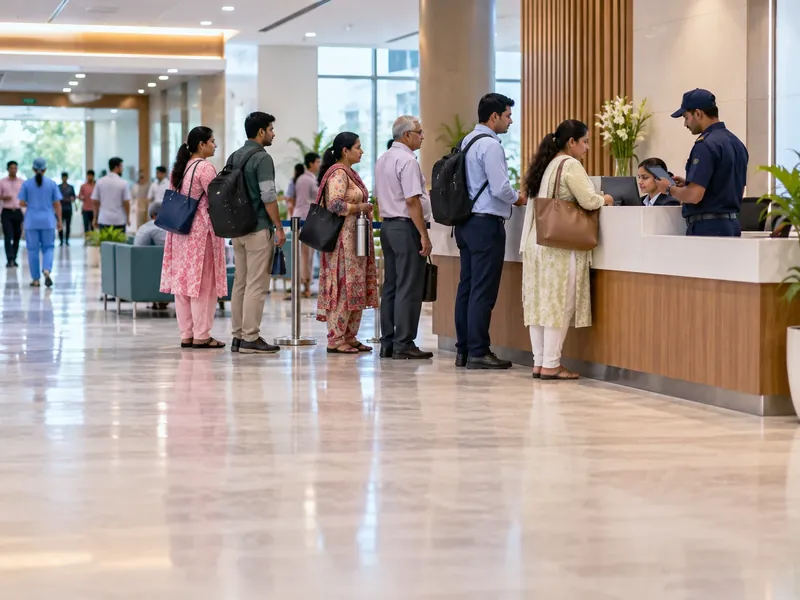
The Evening Visiting Rush
Families queue at the desk at 5 pm, and the register cannot say which ward each one is heading to.
Front office · Security
Streamline Visitor, Attendant and Vendor Management across Hospitals and Clinics with VizPass. Simplify Digital Check-ins, Ward-Wise Visitor Records, WhatsApp-Based Approvals, QR Visitor Passes and Emergency Evacuations while Maintaining Secure, Searchable Visitor Records Across Every Block.
Companies already running their gates on VizPass










Hospitals and Clinics face unique challenges in managing Patients' Visitors, Attendants, Medical Representatives, Vendors and Contractors, Emergency Evacuations while Maintaining Patient Safety, Security and Calm Corridors.
The same four steps for a patient's family member, an attendant, a medical representative or a vendor — each on the VizPass mobile app.
The desk records who the visitor is, the purpose, and the ward or block they are visiting.
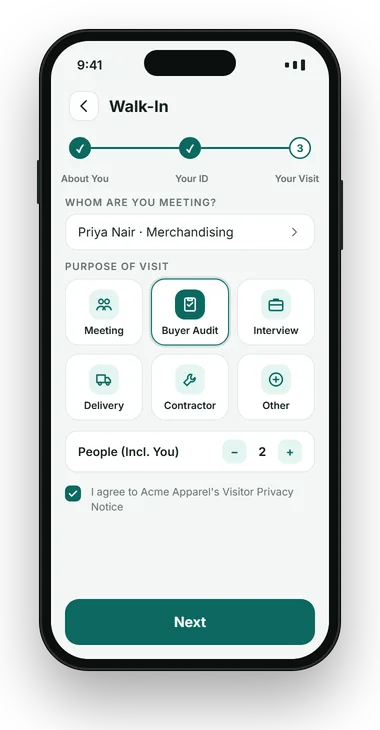
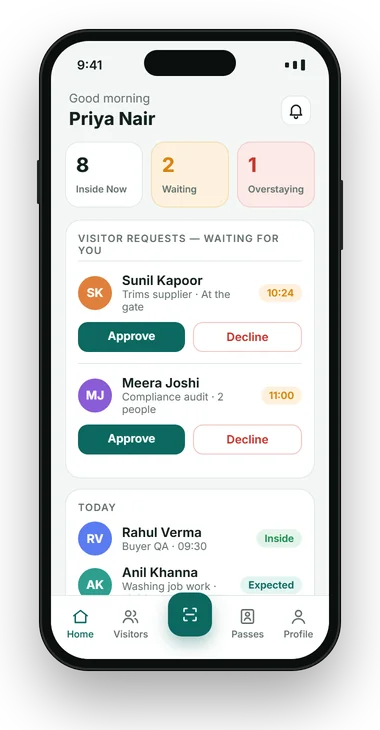
Where your setting asks for it, the department or ward host approves in the app, on WhatsApp or from a link.
A pass with the visitor's name, photo, ward and end time, printed or on the phone.
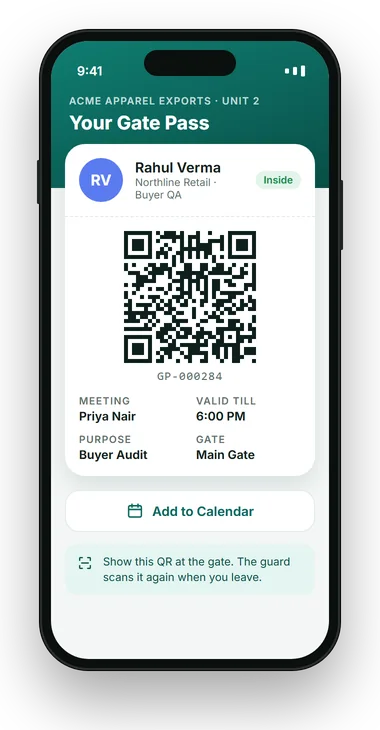
An expired pass is refused at entry, and the exit scan closes the visit so the inside list stays true.
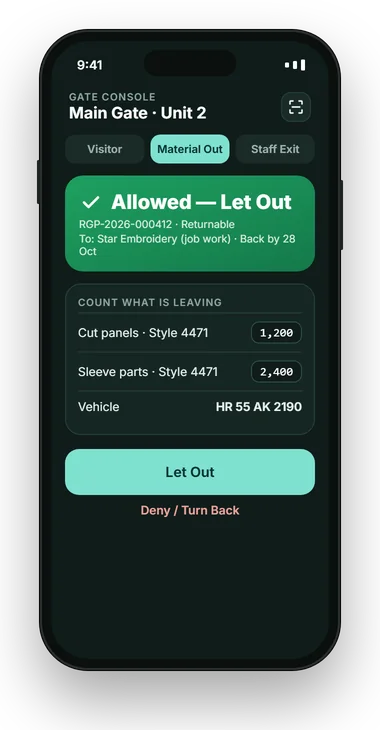
VizPass Visitor Management for Hospitals and Clinics is hospital visitor management software for the visitor desk and the ward entrance: photo and ID at check-in, hospital visitor passes that carry the ward and an end time, attendant visits with the patient named in a note, vendors and contractors logged under their own purposes, and a live list of who is inside each block. It runs on a tablet or phone at the desk, with no hardware to buy.
Hospital corridors are busy, and the visitor desk sets the tone for all of it. Families arrive in the evening visiting hour, attendants change shifts at the bedside, medical representatives wait outside the doctors' block, and biomedical and housekeeping vendors come through the service entrance all day.
Visitor management for hospitals is shaped by three things an office sees less of. Visiting hours matter for patient rest and infection control, so a pass has to stop working when visiting time is over. Every visitor should be tied to a ward and a patient without the desk holding medical information. And in an emergency, the hospital has to know which visitors are inside each block — not only its own staff.
Healthcare security software at a hospital is therefore about calm corridors and a clear record: who came, to which ward, for whom, and when they left — with patient privacy protection built into what the desk records and what it does not.
None of these are clinical failures on day one. They are front desk gaps that turn into crowded wards, worried families and questions nobody can answer later.
Families queue at the desk at 5 pm, and the register cannot say which ward each one is heading to.
Front office · Security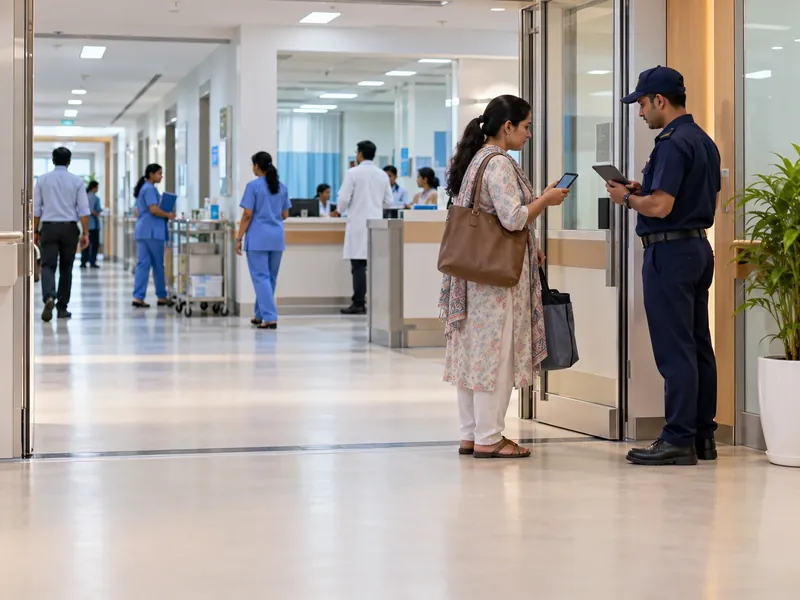
One attendant pass is handed from relative to relative, and the ward has no idea who is actually at the bedside.
Nursing · Security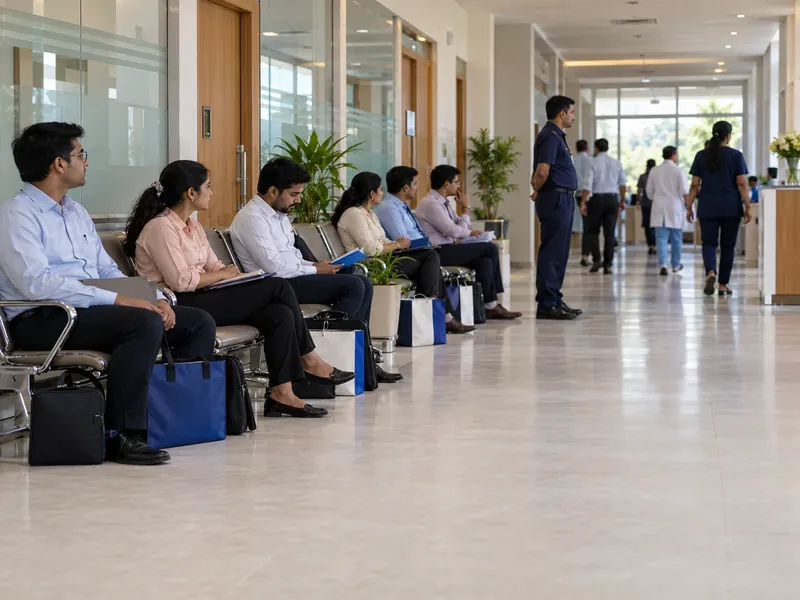
Medical reps wait outside the doctors' block all morning, and nobody records who came or whom they met.
Medical director · Admin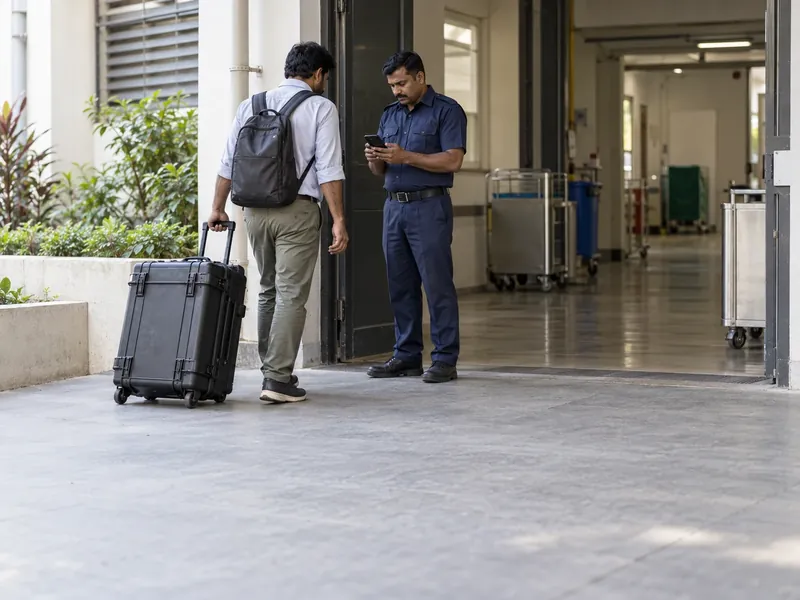
Biomedical, linen and waste vendors use the back entrance, and their visits never reach the main register.
Biomedical · Facilities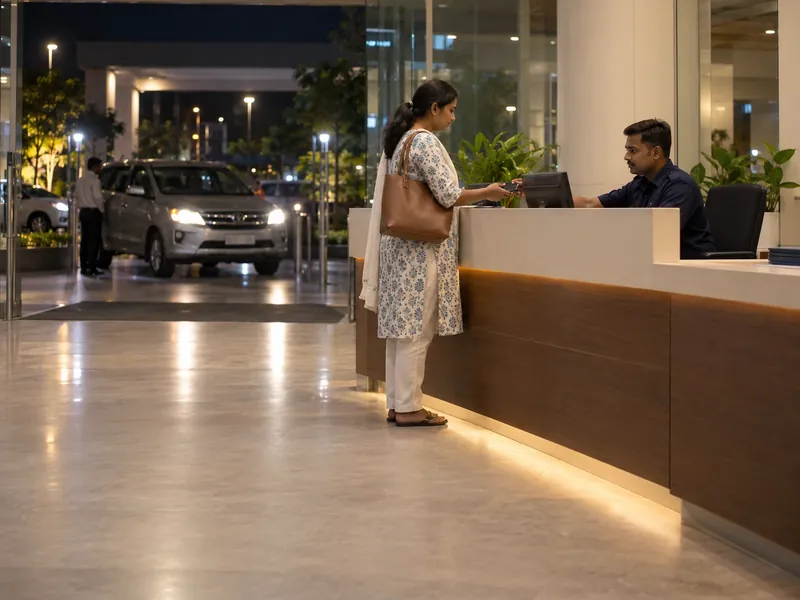
A visitor arrives at 11 pm, long after visiting hours, and the one person on the desk has to decide alone.
Night security
During a fire drill, departments can count their staff, but nobody knows which visitors were in which block.
Safety officer
A slip from the morning still gets someone past the corridor guard at night, because nothing on it says when it ends.
Security head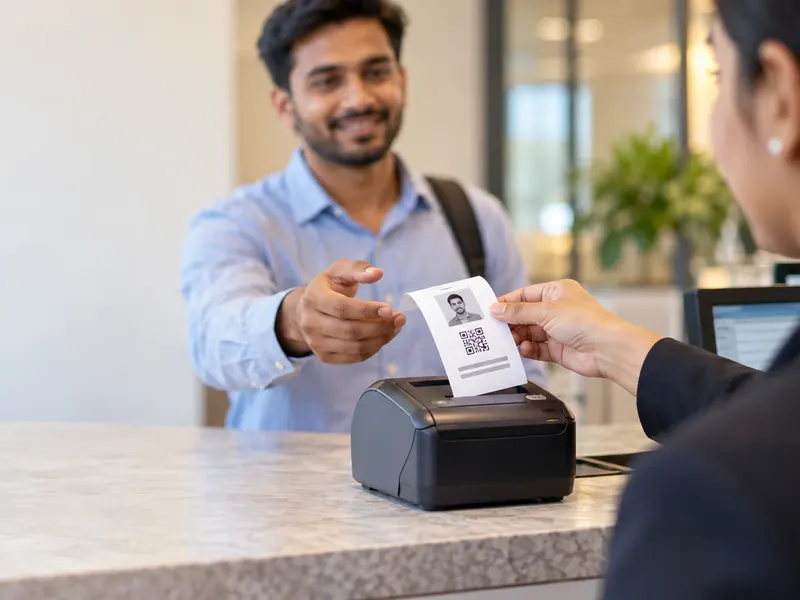
An open register on the desk shows every visitor's name, phone and the patient they came for to anyone who leans over.
Compliance · AdminVizPass replaces the clinic visitor register with a record on the desk tablet. Every visit carries the visitor's photo, ID, purpose, the ward or block being visited and an end time, and the register stays behind a login rather than open on the counter.
At a hospital visitor desk it covers:
Not every plan includes every item: WhatsApp approval, overstay alerts and roll call start on the Basic plan.
Gates like yours
“VizPass has made our front desk operations much more organised. Visitor check-ins, courier entries and gate approvals are now handled digitally, which saves time and improves accountability.”
Gagan Mathur
 OM Sweets
“VizPass gives our operations team better control over daily gate activity. Material movement, employee exits and reports are now easier to track, approve and review.”
Sandeep Garg
Karan Latex Ltd
“VizPass made our front desk faster and more organised. Visitor check-ins, courier entries and approvals are now handled without paper registers.”
Harman S
Admin Head, Ferozepur College of Engineering
“The platform feels simple for reception staff and professional for guests. Pre-registration and instant host alerts have improved our daily visitor flow.”
Rekha Y
Operation Head, Orchid Petal Ltd
“QR check-ins and OTP verification made guest entry smooth and contactless. Our teams receive notifications on time, without follow-up calls.”
Nitish T
Operation Head, HRIT University
“We have much better control at the gate now. Our security team can verify visitors, track movement and maintain accurate digital records.”
Gaurav S
Facility Manager, MMMIPCollege of Pharmacy
“VizPass gives us clear reports for visitors, couriers and gate activity. It saves admin time and helps management review data quickly.”
Harish G
Plant Head, HPL Ltd
“VizPass has made our front desk operations much more organised. Visitor check-ins, courier entries and gate approvals are now handled digitally, which saves time and improves accountability.”
Gagan Mathur
OM Sweets
“VizPass gives our operations team better control over daily gate activity. Material movement, employee exits and reports are now easier to track, approve and review.”
Sandeep Garg
Karan Latex Ltd
“VizPass made our front desk faster and more organised. Visitor check-ins, courier entries and approvals are now handled without paper registers.”
Harman S
Admin Head, Ferozepur College of Engineering
“The platform feels simple for reception staff and professional for guests. Pre-registration and instant host alerts have improved our daily visitor flow.”
Rekha Y
Operation Head, Orchid Petal Ltd
“QR check-ins and OTP verification made guest entry smooth and contactless. Our teams receive notifications on time, without follow-up calls.”
Nitish T
Operation Head, HRIT University
“We have much better control at the gate now. Our security team can verify visitors, track movement and maintain accurate digital records.”
Gaurav S
Facility Manager, MMMIPCollege of Pharmacy
“VizPass gives us clear reports for visitors, couriers and gate activity. It saves admin time and helps management review data quickly.”
Harish G
Plant Head, HPL Ltd
See How VizPass Handles These Challenges
An on-site demo across Delhi NCR, or a live video demo pointed at your visitor desk anywhere in India.
Six situations every hospital and clinic desk meets, and what happens with VizPass in place.
Each pass carries an end time printed on the badge. Set it to match visiting hours, and an expired pass is refused at entry. There are no separate per-ward rules, so the end time on each pass does the work.
Passes that stop at the right timeEach visit is tagged to the ward or block, and the pass prints it, so a nurse can check where the visitor should be. VizPass does not track escorts; staff redirect a visitor found in the wrong ward.
Where each visitor belongsEach attendant gets their own pass with name and photo, and the patient is named in the purpose note. Each pass is one entry and one exit, so a pass cannot be handed on later.
One pass, one personMedical representatives, biomedical, linen and waste vendors are logged under their own purposes, with the block they visit, so reports separate them from families.
Every visit on the registerThe register sits behind a login, hosts see only their own visitors, and staff can be limited to their own block. VizPass holds no patient records — only the visit.
Patient privacy protectionThe On Site list shows every visitor inside, by block. In an evacuation, VizPass alerts visitors inside, their hosts and the desk team, and runs a mark-safe roll call.
Visitors counted, block by blockThe same visitor record, set up for how each kind of healthcare site runs its front desk.
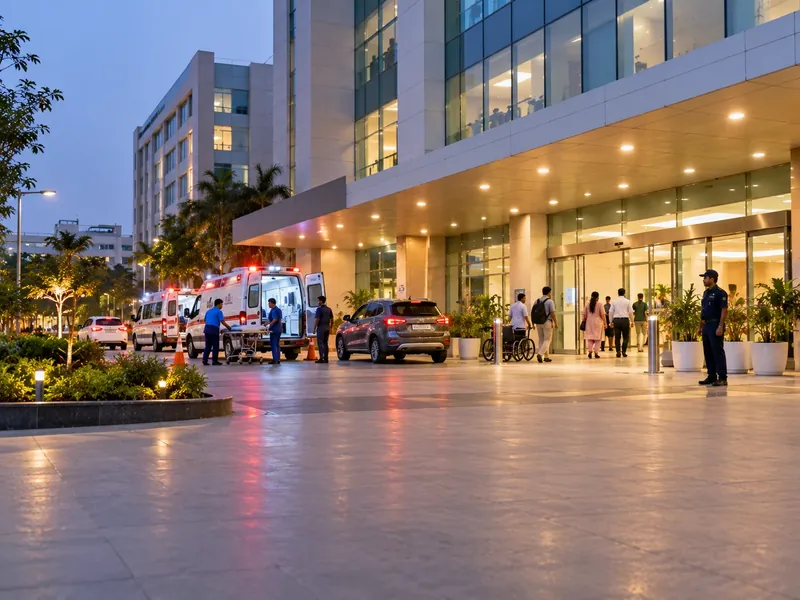
Many blocks and wards, a main gate and a service entrance, with visits tagged to the block and an inside list for emergencies.
Emergency roll callA single desk, a few visitors an hour and medical reps — a clinic visitor register that takes seconds and keeps names off the counter.
Digital check-in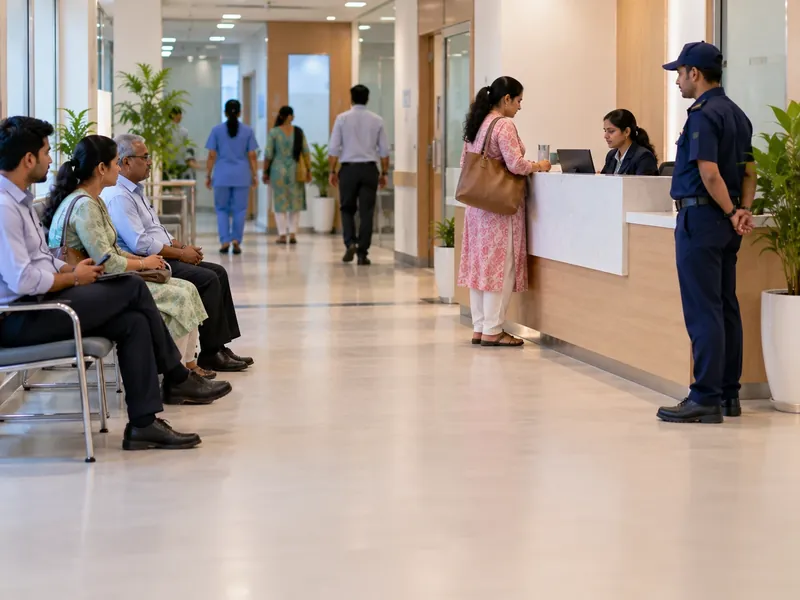
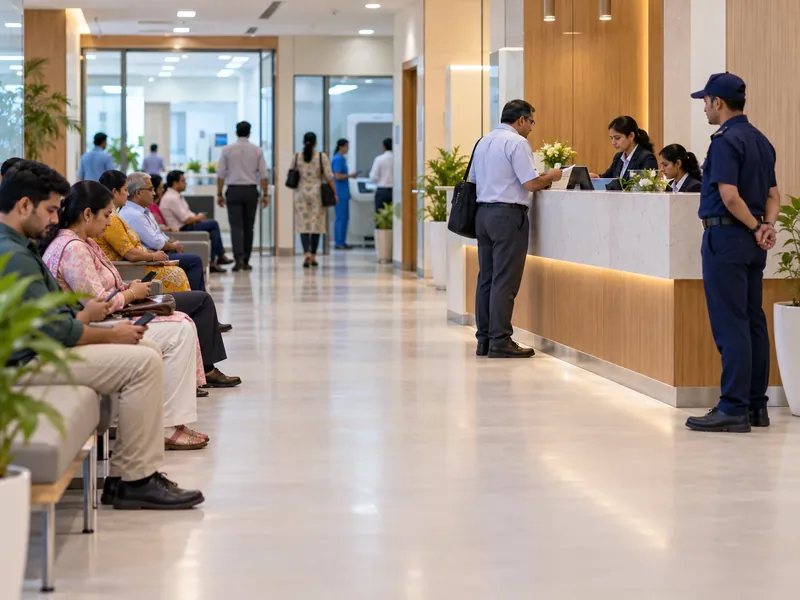
Busy registration counters with accompanying family members, vendors servicing equipment and a steady flow through one door.
Visitor passesLarge campuses with students, faculty, patients' families and vendors, and several gates on one account.
Gate management
Four situations every hospital desk meets, step by step.
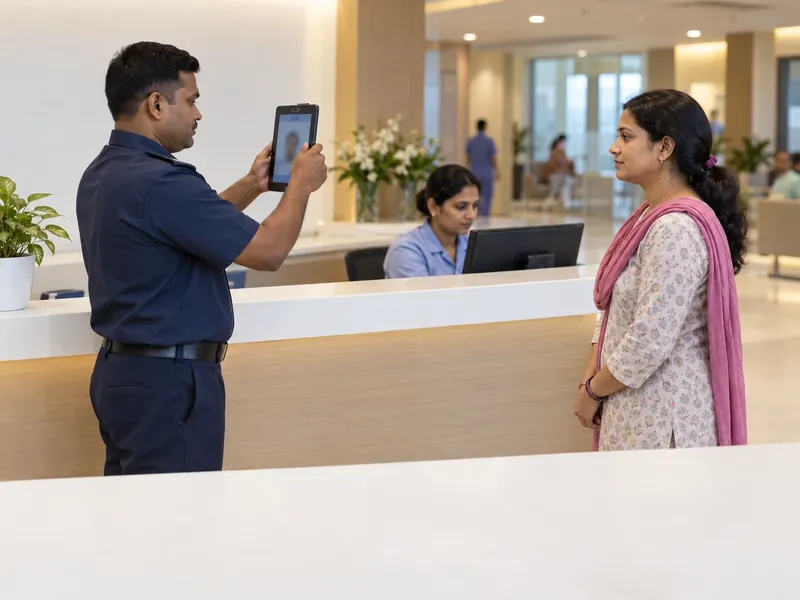
A family member visiting a patient on Ward 4.
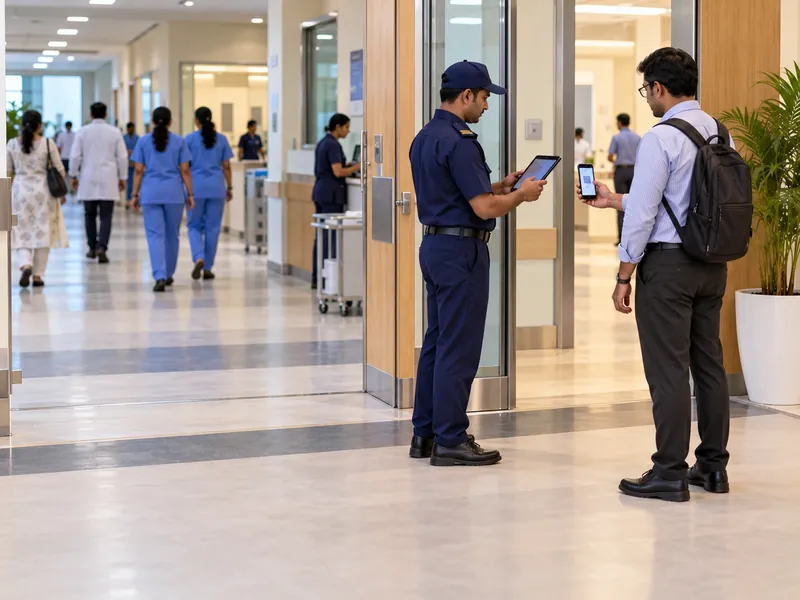
A new family member taking over at the bedside.
An engineer servicing equipment in the imaging block.
On the Basic plan and above. It covers visitors checked in at the desk, not patients or staff.
We do not quote percentages we have not measured. During a trial, measure four things: queue time at the evening desk, visits with no exit scan, visitors refused after hours, and how long a "who was in that ward" question takes to answer.
Every visitor tied to a ward and an end time, and medical reps on the register. For the medical director and nursing.
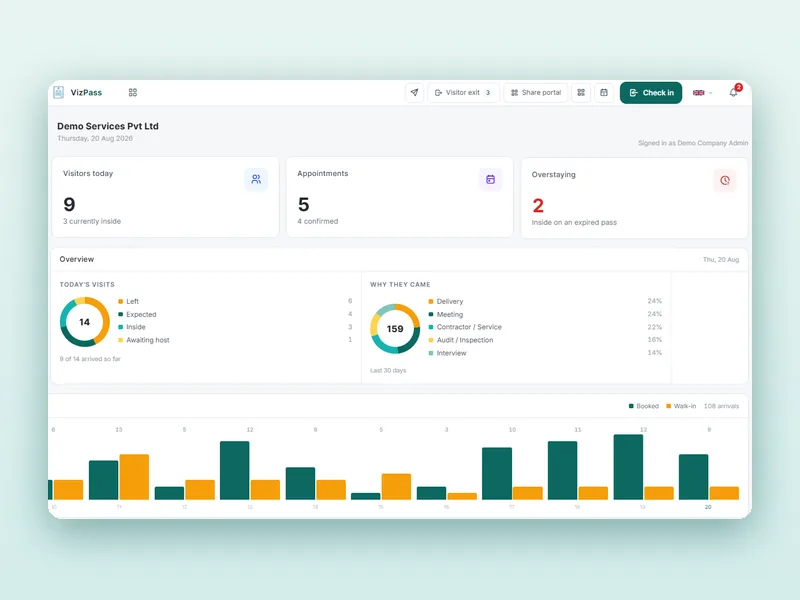
Who visited which ward and when — behind a login, with no medical information stored. For compliance.
Expired passes refused after hours, so the night desk is not deciding alone. For night security.
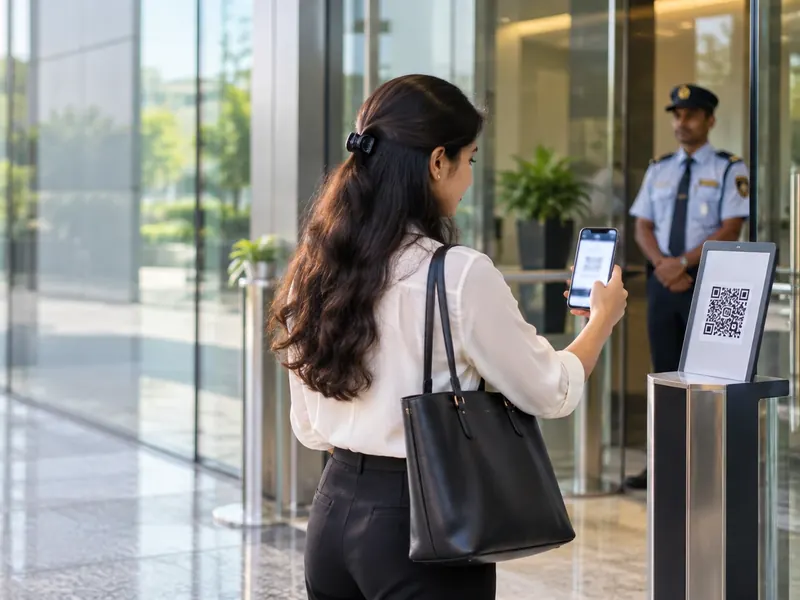
Families can check in from a QR code at the entrance, and returning attendants are recognised by phone. For the front office.
| What matters | Paper register | AVizPass |
|---|---|---|
| Which ward a visitor is heading to | Not recorded | Tagged to the ward; printed on the pass |
| A visitor after visiting hours | Gets in on a morning slip | Expired pass refused at entry |
| An attendant pass handed on | Nobody can tell | One person, one entry and exit per pass |
| Visitor names and phones | Open on the counter | Behind a login, by role |
| Fire drill | This morning's register | Live list of visitors inside, by block |
| Cost | Register books and desk time | From ₹4,999/month with overstay alerts and roll call |
A register can hold up at a small clinic with a few visitors a day. Once families, attendants, medical reps and vendors move through several blocks every evening, the gap between the register and who is really inside is where crowded wards and unanswerable questions start.
Whichever system you shortlist, check five things in the demo: can each visit carry the ward, do passes stop working at the end of visiting hours, can attendants each have their own pass, does the register stay off the counter, and does the vendor publish its prices. Where VizPass stands:
VizPass records the visitor — name, contact details, photo and ID, the ward visited and the times — not the patient. The patient's name appears only in the purpose note the desk types. Visitors who register on the gate app or the self-registration link see your privacy notice and agree to it, and that agreement is recorded on the pass. Your retention policy and wider duties under the DPDP Rules 2025 stay with you and your legal adviser, using guidance such as MeitY's.
Your blocks, wards, desks and visiting hours.
On-site in Delhi NCR, or on video.
Start with the main visitor desk.
Blocks, wards and purposes set up.
Service entrance and more sites, one account.
Set every pass's end time to match visiting hours, or passes will keep working long after the ward has closed to visitors.
Set up blocks and wards before go-live, so every visit carries one from the first evening.
Put the service entrance on the same account, or vendor visits stay off the register.
Families arrive anxious; a desk that can explain the pass in their language keeps the queue calm.
Published pricing
One Flat Price a Month — No Per-User Charges
Prices exclude GST. Start with a free 7-day trial on the Basic plan, no card needed. See what each plan includes →
A visit can be tagged to the ward or block being visited, and the printed pass can show it with the host and purpose, so staff can see where each visitor is meant to be. VizPass does not enforce zone clearance or track escorts, so the pass does not physically stop anyone entering another ward; it gives staff a quick way to spot a visitor in the wrong place and redirect them.
If a pass has an end time and that time has passed, VizPass refuses it at entry and the guard turns the visitor away; the pass can still be used to leave. There is no early-arrival check and no per-ward visiting-hour rule, and refused attempts are not alerted, so set each pass's end time to match visiting hours. A visitor still inside after the end time is flagged, and the host and admins are alerted once.
Each pass is issued to one person, with their name and photo, and can be tagged to the ward; the patient's name goes in the purpose note, since VizPass has no patient records. Security compares the person presenting the pass with the name and photo on it. Each pass allows one entry and one exit, so it cannot be reused, and each new attendant gets their own pass.
Yes. The On Site list shows every visitor inside and filters by workplace — including the blocks or wards under it — and by gate. It shows the block each visit was tagged to at check-in, not a tracked position inside the building. In an emergency, an evacuation alerts every visitor inside, their hosts and the desk team, and runs a mark-safe roll call.
Vendors and contractors go through the same check-in, but each visit carries a purpose from your own list — Vendor, Contractor, Medical Representative — which prints on the pass and lets reports separate them from patient visitors. A contractor visit can be tagged to the block they work in and carry an end time. Approval is set company-wide, not per visitor type.
VizPass collects the visitor's name, contact details, photo and ID, the ward visited and the times — the data needed for gate entry and an audit trail. It holds no patient records. Visitors who self-register see your privacy notice and agree to it, recorded on the pass. Your organisation remains responsible for compliance with the DPDP Rules, using MeitY's guidance.
No. VizPass records visitors, not patients. When an attendant or family member checks in, the desk can type the patient's name in the visit's purpose note so the visit is traceable, but it is not checked against any patient list and no medical information is stored.
Yes. Add a Medical Representative purpose to your own list, and every rep visit carries it, with the doctor or department they met as host. Reports can then show how many reps came, when and whom they met, separately from patients' families and vendors.
Yes. A QR code at the entrance lets a visitor check in on their own phone, choosing the ward and host and adding their details, with optional OTP verification. The desk then only confirms the photo and prints the pass. A returning attendant is recognised by mobile number, so their details fill in.
When an evacuation is raised, VizPass alerts every visitor inside, their hosts and the desk team, and runs a mark-safe roll call of visitors checked in at the desk, by block. It does not cover patients or staff, who are counted by your own procedure. It is on the Basic plan and above.
Plans are a flat monthly price per company with no per-user charges, GST extra: ₹1,499 Single Gate (a plain register for one gate), ₹4,999 Basic, ₹9,999 Front Desk and ₹14,999 Gate Control, with a 7-day free trial on the Basic plan. Overstay alerts, WhatsApp approval and roll call start on Basic. No hardware purchase is needed.
Use the form at the end of this page, the demo button at the top, or WhatsApp. Tell us your type of facility and what you want to solve first, and we call within one working day. The demo runs on-site across Delhi NCR, or on a video call pointed at your live visitor desk anywhere in India.
Further reading
Discuss Your Hospital's Visitor Desk Requirements
Tell us about your facility and what you want to solve first. We call within one working day and show the workflows that matter to you — on-site across Delhi NCR, or on a video call at your desk anywhere in India.
Free for 7 days. Add a gate, invite your hosts, and check your first visitor in this afternoon.